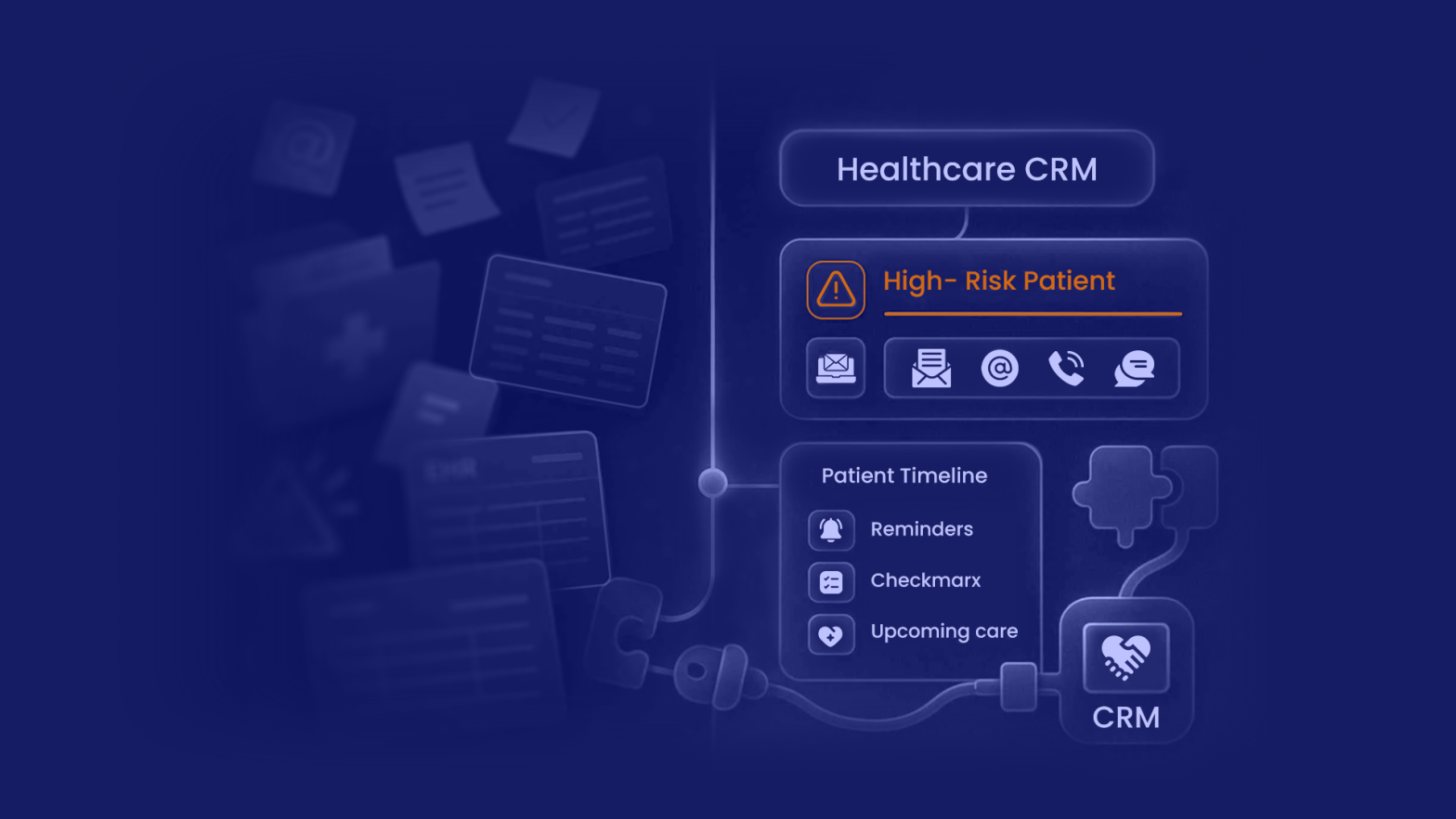
According to the most recent statistics, the worldwide healthcare CRM industry is valued at $17.9 billion and is projected to reach $30.7 billion by 2030. One of the reasons for this rapid growth rate is the rising demand for easily accessible data, as well as increasing efficiency in corporate processes across sectors, including healthcare.
Healthcare customer relationship management (CRM) solutions help medical companies improve their overall performance. They accomplish this by establishing quantifiable ties among clinicians, patients, team members, and client referrals. CRM assists medical service providers in storing and managing patient information, optimizing service and engagement. It also helps refine patient acquisition strategy and automate marketing and sales activities.
In this post, we’ll explore the best healthcare CRM software available today, each with different features designed for the specific needs of healthcare organizations. We will also look at the overall healthcare CRM development process.
What is CRM in Healthcare?
Healthcare CRM software is designed to free you of excessive and redundant administrative tasks. It involves alerting patients of impending visits and setting up appointments. This helps your employees to focus their time and energy on caring for patients and satisfying company demands. With healthcare CRM software, your team can collaborate more effectively. CRM software also helps employees communicate with one another more frequently and have better access to shared information. This will result in increased performance, better outcomes, and higher patient satisfaction.
Building healthcare CRM systems involves integrating software solutions that are adapted to the particular requirements of certain medical facilities. This includes healthcare CRM software development for tracking medical histories and scheduling appointments. It also helps optimize patient contacts and boost overall satisfaction with care. CRM systems provide a consolidated platform for medical service providers to conveniently handle patient data, scheduled appointments, and communications.
Suppose a patient arrives at your clinic for physiotherapy. The treatment would last for a few sessions. A healthcare CRM system will automatically notify patients of the do’s and don’ts before their initial appointment. The medical CRM software will also remind your employees to give patients a call and physically examine their condition. This method is how healthcare management software promotes a caring relationship between clinics and patients.
The Impact of Healthcare CRM Software in Modern Practices
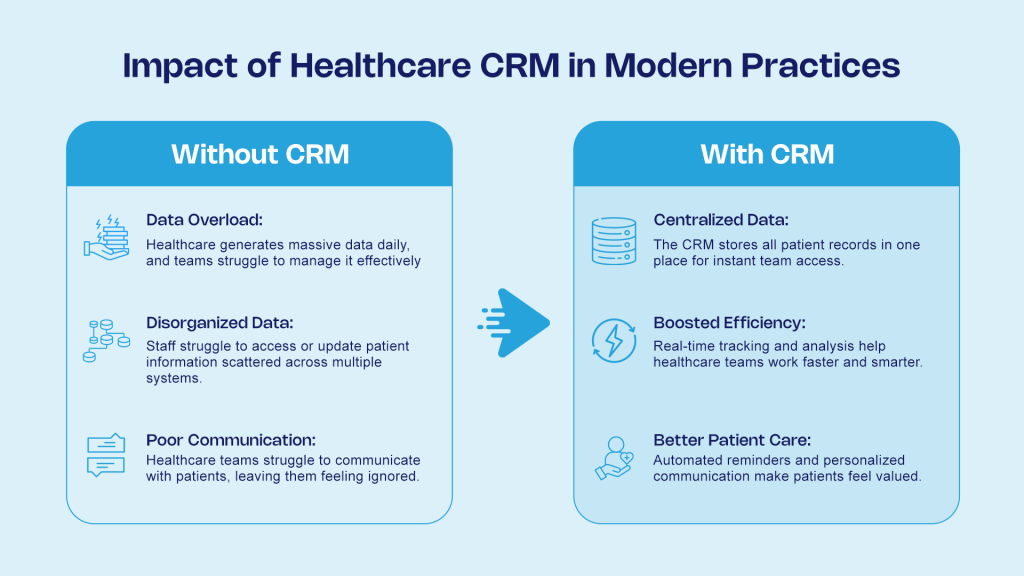
The primary issue for healthcare organizations is figuring out how to centralize the growing volume of medical records. The healthcare industry produces over 30% of the world’s daily data, which is a staggering statistic. This data must be tracked and evaluated efficiently. Proper analysis results in more efficient procedures and improved patient outcomes.
Although the amount of data generated by individual medical facilities is obviously lower, the amount of medical records they handle on a daily basis is still quite significant. That is precisely where a medical CRM comes into light. By centralizing patient data, it becomes easier to access and update across multiple systems and departments. As a result, medical professionals may easily access information whenever they need it without being confronted with a large number of paper records.
Another benefit is the ability to interact with and retain customers. People today have a plethora of options, and when choosing a healthcare provider, they often prefer one that provides individualized care. CRMs, with their ability to evaluate patient data and customize engagements accordingly, are proving vital in this context. By automatically sending out individualized appointment reminders, they may help patients feel more valued and taken care of.
Major Categories of Healthcare CRM Solutions
Patient Relationship Management (CRM)
This type of healthcare CRM software was designed to improve the relationships between healthcare providers and patients. It helps healthcare practitioners to organize patient visits, communicate effectively, and increase engagement in partnership with physicians.
Analytics for Medical CRM
Such customer relationship management systems use patient data to help you make better decisions and improve healthcare outcomes. Analytical CRM systems provide useful insights into patient populations, treatment success, and used resources by integrating data from multiple sources, such as electronic health records (EHRs).
Referral Management Type CRM
The purpose of referral management CRM systems is to optimize the referral procedure in healthcare networks. These systems facilitate effective tracking and administration of patient referrals, successful operations management, and seamless interaction between referring and obtaining physicians.
Clinical Custom Healthcare CRM
Clinical healthcare CRMs are made to assist medical practitioners in organizing and managing clinical processes. These are frequently linked with EHRs during healthcare CRM development to help with activities like documentation, care coordination, and treatment plans.
Different Types of Healthcare CRM Software
HubSpot
HubSpot is another viable medical care CRM platform. It offers multiple tools for marketing your products and automates customer service.
Features:
- Similar to EngageBay, HubSpot gives you a 360-degree perspective of your customers so you can better understand them.
- You can swiftly issue tickets, prioritize them based on severity, route them to the right practitioner or specialist, and turn them off promptly depending on the right triggers.
- HubSpot also offers on-the-go content optimization. This feature allows you to easily write enriched content by providing live guidance, keywords, and ideas.
- HubSpot’s touchdown page builder helps you to quickly drag-and-drop elements to create attractive and functional web pages. Then, A/B test each component.
Keap
Keap provides clinical hospitals, health centers, and other healthcare facilities with a range of healthcare CRM technologies.
Features:
- You can easily identify new clients, organize them into listings, use tags, deliver personalized digital content, and make prompt medical recommendations.
- Plan reservations simplify the booking and appointment scheduling procedure for medical professionals, medical care specialists, clinical personnel, suppliers, and individuals.
- It also enables easy integration with a variety of business applications. Lastly, Keap’s HIPAA compliance capabilities make it an excellent patient relationship management software solution.
Salesforce
Salesforce cloud-based CRM software is one of the best clinical CRM programs in healthcare. It offers equipment for every stage of the customer journey, from acquisition to conversion and long-term involvement.
Features:
- You may automatically map all of the communications among your employees, people, and much more by linking with tracing.
- Create an account and contact management to see all of your clients.
- Lead administration enables you to follow your leads across several channels, allowing you to make better decisions and close sales more quickly.
- Also, you receive mobile CRM software for medical care for portability. For example, you can log calls, track hot leads, and verify records while on the go.
EngageBay
EngageBay is an all-in-one advertising, marketing, sales, and customer service software program. Healthcare organizations increase their profits with this platform. It allows you to efficiently gather leads, nurture them, and swiftly convert them into satisfied customers.
You can easily integrate your current healthcare system and transmit data to EngageBay due to free onboarding sessions, migration solutions, and several assimilations. However, below the marginal configuration, there are practical features and equipment that can help with development.
Features:
EngageBay’s segmentation feature helps you to organize your leads and clients into checklists based on demographics. It also covers transaction history, tips, medical conditions, and other criteria.
Customs laws can also be used to separate personal information.
- Email programs and email series enable you to offer timely and targeted content regarding medical treatment, important details, personal billing, and other topics.
- You can use autoresponders to offer medical advice, consultations, birthday greetings, and diagnostics to your clients instantaneously.
- Easily A/B test each aspect of your touchdown page for maximum conversion, including headers, CTAs, and hyperlinks.
- With 360-degree consumer perception, you can see your patients from a different angle, which will help you quickly and efficiently identify them and provide treatment plans.
EngageBay is a customized CRM program that shows you can adjust the software and its configurations to meet your requirements.
Pipedrive
It offers an extensive selection of medical care CRM features and tools that are incredibly beneficial to healthcare providers.
Features:
- Pipedrive’s AI-powered sales assistant helps you optimize your automation with reports, ideas, efficiency graphs, notifications, and process suggestions.
- You can quickly send essential wellness broadcasts, send group emails to individuals with certain illnesses (such as diabetes, heart disease, and so on), construct elegant and receptive email themes using the built-in email builder, and much more.
- Pipedrive’s healthcare CRM actively gathers vital patient data from various touchpoints and networks. It helps you discover hot leads and delivers resources to turn them into paying customers.
Key Features of CRM in the Healthcare Sector
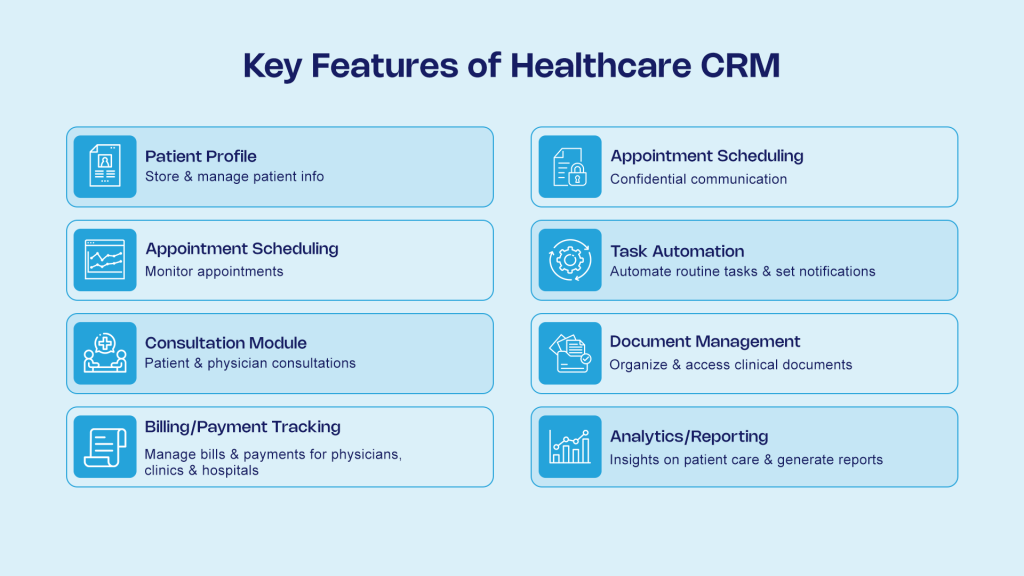
Patient Profile
Store and manage all info related to patient profiles.
Appointment Scheduling
Schedule and monitor the appointment process.
Secure Messaging
Confidential communication-based messaging.
Consultation Module
Allow the patient and physician to perform consultations.
Billing/Payment Tracking
Ability to store and monitor bills and payment information for physicians, clinics, and hospitals.
Task Automation
Automate routine tasks and set reminder notifications for the physician or clinic.
Document Management
Organize and access clinical documents for future reference and use.
Analytics & Reporting
Provide insights into patient care trends and generate statistical reports for the physician and clinic.
Conclusion
Developing healthcare CRM software involves more than just installing a program. It’s about developing patient-physician relationships, streamlining procedures, and enhancing care. If a CRM is developed with the proper strategy and long-term objectives, it can be an effective catalyst for change in the healthcare industry. At OCloud Solutions, we deliver secure, user-friendly CRM systems that are designed for modern medical practices and legal requirements. Our specialist solutions help medical professionals perform more efficiently. They provide customized experiences and adjust to the changing needs of the healthcare sector.