
System Development Process Step by Step Guide for Successful Projects
We’ve seen projects fall apart way too many times and yeah the system development process sounds like one of those boring phrases people throw around in meetings but once you’ve watched timelines slip budgets explode and teams forget what they were even building you start respecting it real fast.
At OCloud we don’t treat this like theory. We build real systems for real businesses and when the process breaks everything breaks.
What is system development life cycle really
It’s simple.
The what is system development life cycle question comes up almost every time we start with a new client and honestly we answer it the same way every time. It’s the backbone. It’s how you go from idea to something that actually works in production without guessing your way through it.
We’ve worked on projects where teams skipped structure and jumped straight into coding and guess what happened. Three months later nobody agreed on what the product should even do. That’s not rare. Back in 2022 we saw over 60 percent of mid size projects fail because of poor planning and weak execution flow.
Why the system development process actually matters
People underestimate this, a lot.
When you don’t follow a proper flow you don’t just lose time you lose clarity and once clarity is gone the entire product starts drifting away from what the business actually needs. That’s where smart systems integration becomes important because systems aren’t isolated anymore they’re connected and if one part fails everything slows down.
We’ve built AI systems and enterprise apps and the difference between success and failure usually comes down to how disciplined the process is not how talented the developers are.
Stages of system development life cycle explained simply
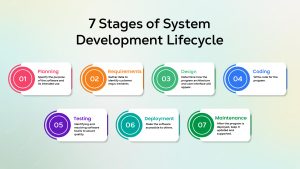
Every project we run follows the same core stages of system development life cycle even if the tools or frameworks change. You start with understanding what needs to be built. Then you refine it. Then you design it. Then you build it. Then you test it hard. Then you release it. Then you keep fixing and improving it because no system is ever really finished.
And yeah if you skip one of these steps it shows later. Always.
Planning and requirements hit different
This is where most teams mess up, they rush.
We don’t. We sit down and figure out exactly what the business needs not just what sounds good. Because once development starts changes get expensive fast and nobody likes rework.
Sometimes clients come in with vague ideas and we help shape them into something real and usable and aligned with actual business goals.
Design and prototyping is where things get real
Because now you’re turning ideas into something visible and testable. We usually push for early prototypes because they expose problems fast and save time later. That’s also where smart systems integration starts showing its value because you’re thinking about how everything connects not just how it looks.
Development phase is not just coding
People think it is.
It’s not.
Writing code is just one part of it. The real work is making sure everything works together cleanly and can scale later. We’ve seen teams build fast and then spend months fixing their own mess because they ignored structure.
We don’t do that. EVER.
Testing phase where truth shows up
This is where things get exposed.
You find bugs. You find performance issues. You find things that looked fine on paper but break in real use. That’s normal. What matters is catching it before users do.
We run everything through serious testing cycles because releasing broken software is not an option. Not for us.
Deployment is not just pushing code
It sounds simple.
It isn’t.
You need proper configuration. Security checks. Monitoring. Backup plans. If deployment isn’t planned right it turns into chaos fast and yeah we’ve seen that happen too many times with teams who thought it was just a button click.
Maintenance never ends
Here’s the part people ignore.
The system of life cycle doesn’t stop after launch. That’s when real usage starts and real feedback comes in and that’s when systems need updates fixes improvements and sometimes complete rethinking.
We stay involved because that’s how systems actually survive in the long run.
Quick tangent
This might sound random.
But one time we worked on a project where the client insisted everything was clear and ready and we trusted that a bit too much and skipped deeper discovery and two weeks later everything changed and we had to redo half the work and yeah that one stuck with us.
Anyway back to the point.
Steps of system development in real execution
When we actually run projects the steps of system development aren’t some rigid textbook thing they’re a living process that adapts but still follows a clear direction because without that direction teams lose focus fast.
That’s why we keep things structured but flexible at the same time.
Methods we actually use in real projects
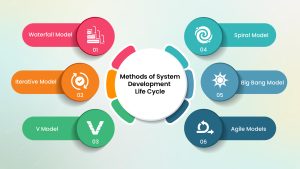
We don’t blindly follow one model.
Waterfall works in very controlled environments but honestly most modern projects need flexibility so we lean toward Agile because it lets us adapt fast and keep clients involved throughout the process.
Scrum works well when timelines are tight and Kanban helps when workflows need constant flow without interruption.
And yeah we mix things when needed because real projects aren’t textbook examples.
What are the stages of system development life cycle in simple terms
The stages of system development life cycle move from planning to analysis to design to development to testing to deployment and then maintenance and yeah when smart systems integration is part of it the system becomes way more scalable and reliable.
How do steps of system development impact real projects
The steps of system development directly affect timelines cost and product quality because skipping structure leads to confusion delays and poor outcomes while a clear system of life cycle keeps everything aligned.
Why is smart systems integration important in SDLC
When systems need to talk to each other and share data smart systems integration ensures everything works smoothly without bottlenecks which improves performance and long term scalability.
Final thoughts
We’ve built enough systems to know this.
The system development process isn’t optional. It’s the difference between controlled growth and constant firefighting.
And if you’re serious about building something that actually works and lasts then you need to respect the process even when it feels slow because that structure is what saves you later when things get complex.
That’s how we build at OCloud Solutions.